Driveway drainage in Pittsburgh
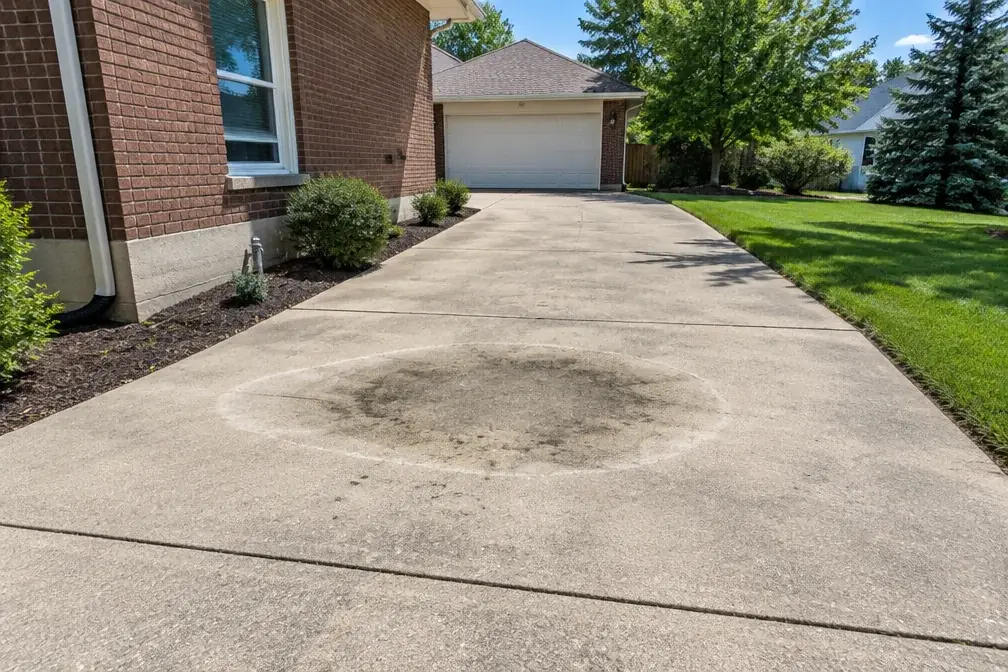
Driveway drainage problems get worse quietly. Water that sits or runs under a slab washes out the base, then freezes and lifts it. In a city built on hills and clay, getting the water moving is usually the most useful thing you can do for your driveway.
Signs of a drainage problem
You can often spot trouble long before the slab fails. These are the things to look for after a rain.
- Puddles still sitting an hour after the rain stops
- Sheets of ice in the same place each winter
- Soil or stone washed out along the edges
- Cracks running from a downspout
- Water stains on the garage floor
- Slabs that tilt toward the house
Ways to fix it
No single answer works on every lot. The right fix depends on the slope, the soil and where you can legally send the water.
| Fix | When it works | Notes |
|---|---|---|
| Move downspouts | Roof water is reaching the slab | The cheapest step, so start here |
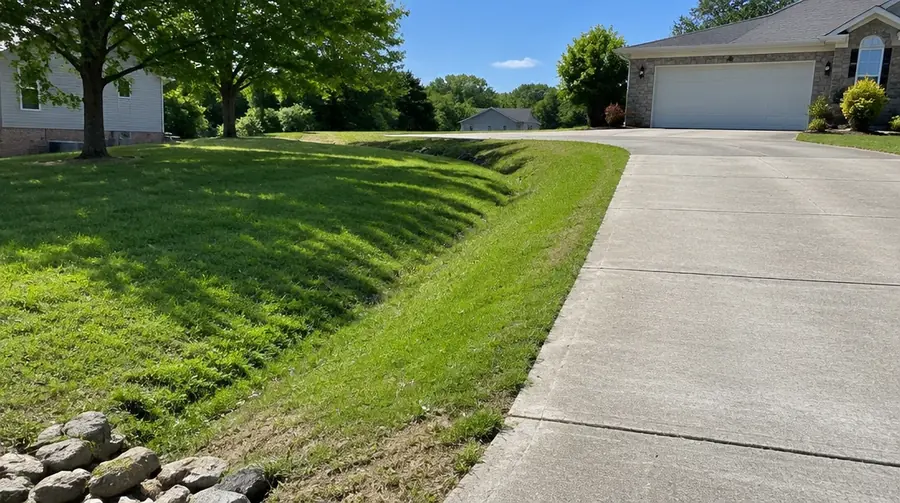
| Swale beside the driveway | There is lawn to shape | A shallow grassy channel moves water away |
| French drain | Water soaks in along an edge | Gravel and pipe, needing an outlet downhill |
| Trench drain | Water runs down the slab | Catches surface water across the driveway |
| Regrade or replace | The slab itself slopes wrong | A proper fix for a bad pitch |
Slope is the real fix
A driveway should fall at about 1/4 inch per foot, or 2 percent, away from the house, so that water leaves on its own. Over the years, slabs settle and that pitch can flatten or reverse. Patching only helps on a small dip. If the slab really does slope the wrong way, the lasting answer is new concrete at the right grade, as described on our concrete driveway replacement page. If a slab has sunk in one place, read about sunken driveway repair.
How the job goes
- Watch the water
Show us photos from a storm if you have them.
- Check the grade
We measure the slope, and find a place to send water.
- Plan the fix
You get options, starting with the least costly.
- Build it
Grading, drains or new concrete go in.
- Test it
We run water through to see that it works.
Common questions
How to fix water ponding on concrete?
Small dips can be raised with a bonded patch. Larger low spots usually mean lifting the slab or replacing that panel.
How to fix ponding on concrete?
Find the low spot, then raise it, regrade it or give the water a path out through a drain.
How to fix ponding concrete slab?
If it's a small area, a thin patch can work. If the whole slab is flat, you need a drain or a new pitch.
Can you slope concrete?
Yes. New slabs are formed to a slope. Old ones can be changed with an overlay, but only within limits.
How to keep moisture out of garage?
Keep the slab pitched away from the door, seal cracks and send downspouts well clear of the walls.
More driveway services
- concrete driveway installation
- concrete driveway replacement
- concrete driveway repair
- concrete driveway resurfacing
- stamped concrete driveway
- exposed aggregate concrete driveway
- driveway trench drain
- driveway apron
- concrete driveway sealing
- driveway crack repair
- sunken driveway repair
- driveway extension